The Neo-Melanesian Papuans of Solomon Islands
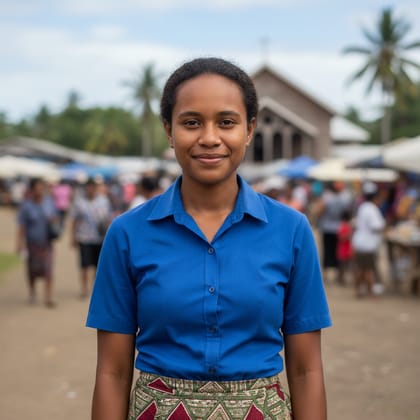
The Neo-Melanesian Papuans of Solomon Islands, numbering approximately 7,900 people, are No Longer Unreached. They are an indigenous ethnic group of Papua New Guinea. They mostly adhere to Protestantism and Tok Pisin is their primary language.

Photo by Google. (2026). Image generated by Gemini 2.5 Flash: Neo-Melanesian Papuan

Fast Facts:

Affinity Group: Pacific Islander Peoples
Country: Solomon Islands
People Cluster: New Guinea
Primary Language(s): Tok Pisin (tpi)
Primary Religion(s): Protestantism
Population: 7,900
Strategic Progress Index (SPI): No Longer Unreached
Global Status of Evangelical Christianity (GSEC): 5% or Greater but Less than 10% Evangelical
People Group ID: PG010784
View on Joshua Project

Pray for the Neo-Melanesian Papuans of Solomon Islands

Join others around the world in praying for the lost to be saved, the gospel to advance, the global Church to grow, and for laborers to be sent out and sustained in the harvest.

Dig Deeper (Religion):

Primary Religion: Protestantism
Religious Affiliation: Christianity

—
%
Protestantism Adherents

Dig Deeper (Language):

Primary Language: Tok Pisin
Language Family: Indo-European

100%
%
Tok Pisin Speakers

Media Resources in Tok Pisin:

Films:
TitleLink
JESUSView Film

1 film

Bible Resources in Tok Pisin:

Bible Name (Translation)VideoAudioText
1989 Bible Society of Papua New Guinea✓✓✓

1 entry

Or check out the Tok Pisin bible at Bible.com

Linked from YouVersion

SPI: No longer Unreached

The Neo-Melanesian Papuans are No Longer Unreached, which means there are more than 2% evangelical Christian populations and there are churches consistent with evangelical faith and practice. There is still more to be done among them.

Next steps for the Neo-Melanesian Papuans:
Empower local believers to begin praying for their own people
Continue gospel seed sowing and church planting
Encourage local leaders to being leading church planting strategy and looking for Unreached and Unengaged groups nearby

Pray specifically for the Neo-Melanesian Papuans of Solomon Islands

During those many days the king of Egypt died, and the people of Israel groaned because of their slavery and cried out for help. Their cry for rescue from slavery came up to God. And God heard their groaning, and God remembered his covenant with Abraham, with Isaac, and with Jacob.
readExodus 2:23-24

As the lost among them labor, groan, and cry out under false religions and sin, pray God will have mercy on them and hear their cries, that He will be their Rescuer from the kingdom of darkness and bring them into the kingdom of light.

Your kingdom come, your will be done, on earth as it is in heaven.
readMatthew 6:10

Pray that God's will be done on earth as it is in heaven, and that people will seek His kingdom and righteousness above all else, trusting in His provision.

Not neglecting to meet together, as is the habit of some, but encouraging one another, and all the more as you see the Day drawing near.
readHebrews 10:25

Pray that as people place their faith in Christ, they will not neglect meeting together but encourage one another as they see the Day approaching.

And how are they to preach unless they are sent? As it is written, “How beautiful are the feet of those who preach the good news!”
readRomans 10:15

Pray that God will call many believers who will obediently go and share the gospel with those who desperately need it.

Neo-Melanesian Papuan Across Countries (ROP3 - 107203) reported in the following countries:

Strategic Progress Index
All

4 people groups

PhotoPeople Group IDNameCountryPopulation ▼Strategic Progress IndexLanguageReligion
Neo-Melanesian PapuansNeo-Melanesian PapuansPapua New Guinea232,000No Longer UnreachedTok PisinProtestantism
Neo-Melanesian PapuansNeo-Melanesian PapuansAustralia31,500No Longer UnreachedTok PisinProtestantism
Neo-Melanesian PapuansNeo-Melanesian PapuansSolomon Islands7,900No Longer UnreachedTok PisinProtestantism
MelanesiansMelanesiansUnited States1,600No Longer UnreachedTok PisinProtestantism

To download a comprehensive people group list in spreadsheet form, visit our Research Data page.

Peoplegroups.org relies on updates from the field and other organizations for much of our data, so if you have any updates, please contact us. We use various international naming standards. For a list of these standards and fields, visit our Data Standards section.

Scroll to Top